

The project Greek Heritage in European Culture and Identity’ (GrECI) ran from 1 January 2023 to 31 December 2025. During that time, the project consortium focused on the heritage of ancient Greece, commonly acclaimed as a ‘pillar’ of common European culture and identity. The complex historical processes of cultural reception and appropriation that shaped this notion are, however, still hardly understood, partly due to institutional fragmentation of the field of early modern Hellenism. GrECI explored a key phase in this process: the reception and appropriation of ancient Greek culture in early modern Europe (15th-17th century), from the so-called ‘rediscovery’ of Greek language and literature to their full incorporation in the European cultural landscape. GrECI reexamined this complex historical subject and its implications for present-day ideas of European identity within an interdisciplinary and international framework, through a consortium of three partners from Cyprus (University of Cyprus), Norway (University of Oslo), and France (University Marie et Louis Pasteur).
The three partner institutes approached the reception and appropriation of Greek heritage in early modern Europe from four different disciplines: the history of the book, digital heritage studies, language and literature studies, and intellectual history (Reformation studies). The consortium was particularly interested in why and how Ancient Greece became a shared cultural archive, used as a common reference point for self-identification throughout Europe. Through specific case studies The project’s hypothesis was that the answer to this question is not self-evident and cannot be reduced to general musings on the cultural excellence of Ancient Greece. Rather, the analysis of the process should be grounded on the specific, historical processes that led to Greece becoming a ‘common archive’ for generations of Europeans. By exploring how this process unfolded, GrECI also encouraged a critical historical interrogation of how modern notions of European identity emerged.
The project team considered the subject from four perspectives:
1. The dissemination of the Greek text textual history (Book history)
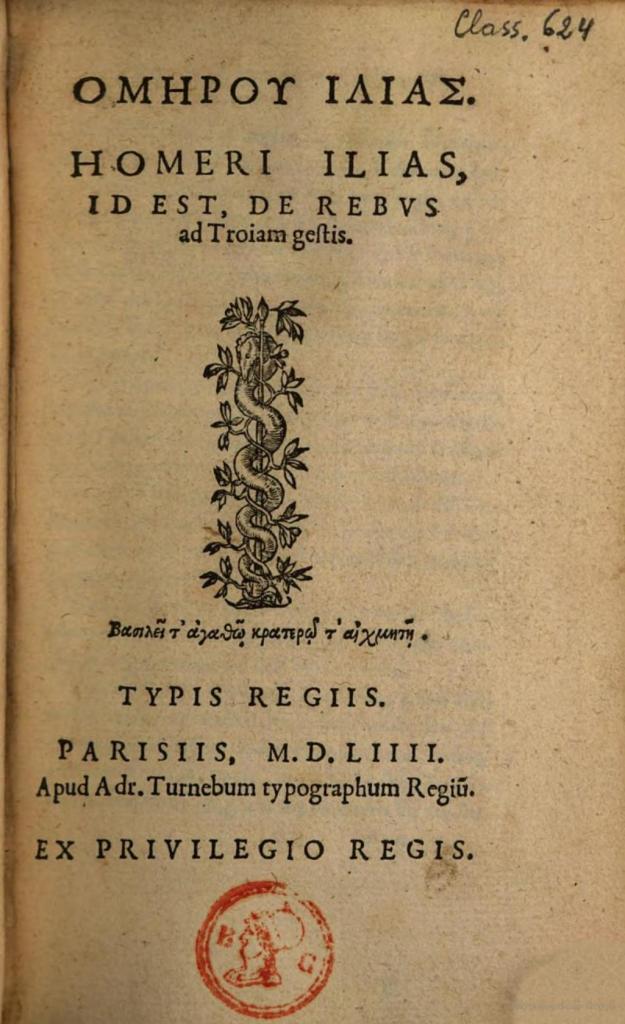
Beyond the commonplace statements regarding the wide availability of Greek texts during the sixteenth century, with printers and publishers (such as Aldo Manuzio in Venice, or the Estiennes in Paris and Geneva) producing ‘the classics’ in the original language in printed form for the very first time., many crucial questions regarding the publication of Greek Books remain. Research during the GrECI project addressed aspects such as the circulation of Greek books, popularity of authors and others as a way of contextualising and sharpening our understanding of the role of Greek books in disseminating Greek heritage and culture in Europe in the early modern period. Some of the project’s findings will be published in a forthcoming volume titled Greek Books in the European Book Market (to be published by De Gruyter-Brill).
2. The role of Greek in the emergence of vernacular cultures (Language and literature studies)
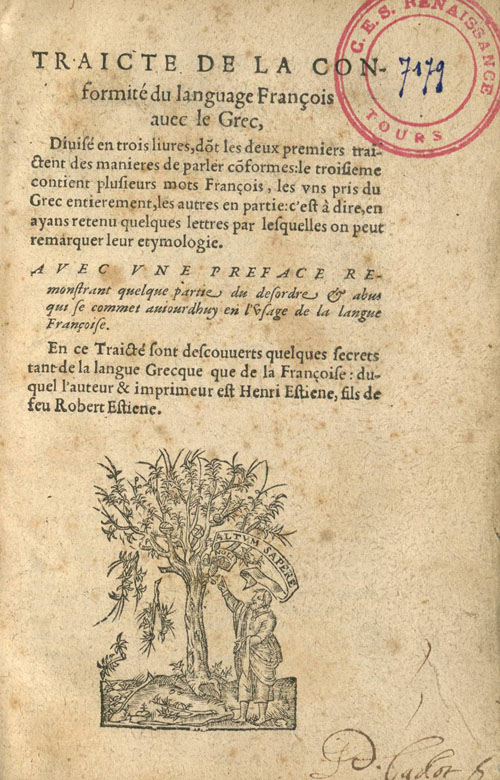
In various areas in early modern Europe, from Italy to Denmark, the study of Greek played an important role in the articulation of regional or ‘vernacular’ identities. Perceived affinities of languages such as French, Dutch, German, and Danish with Ancient Greek, enabled writers to ‘ennoble’ their native cultures. It enabled people to formulate vernacular alternatives to the Latin-dominated Republic of Letters. This often went hand in hand with the idea that certain nations had a privileged relationship with the ancient Greeks, historically, culturally, or even in terms of ‘descent’. Examples of this Europe-wide phenomenon in Italy, the Low Countries, and Scandinavia remain underexplored, and a comparative, European approach to the subject is still lacking. The GrECI consortium worked towards comparing instances of this phenomenon in different cultures.
3. Greek and Greek texts in religious polemics and confessional strife (intellectual history and Reformation studies)

Knowledge of Greek was paramount in religious reforming tendencies of the fifteenth and sixteenth centuries, within the context of humanism and the exhortation to return to the text of the Bible in its original languages. Thus, the learning of Greek was necessary as a means of accessing Scripture. In their polemics, reformers stressed the ‘return’ to the early Christian Church and claimed special relationship with the Greek tradition, seeking thus to explain and legitimise their rupture with the Church. From the Catholics’ point of view, meanwhile, texts of the early Greek Church Fathers provided useful examples towards understanding and combatting ‘heresy’. Within the context of the GreCI project, we explored how Greek literature was integrated in debates on religion and used as a common reference point in creating religious identities.
4. The engagement of Europeans with the physical remains of the ancient Greek past (Greek Material Heritage and Digital Humanities)

Besides the textual transmission of the Greek heritage, the non-textual visual and material aspects are an important, yet often overlooked aspect of early modern Hellenism. Members of the GrECI consortium explored the impact which the encounter with classical monuments had on early modern travellers from western Europe, with special emphasis on the significance this experience had for the construction of European identities. Travel journals written by Grand Tour travellers were examined in order to create a map with their itineraries by means of GIS (Geographic information system), together with a geodatabase containing details about the journeys. The data collected was analysed focusing on, e.g. the most visited areas and the responses these sites elicited to early modern western travellers; the results were visualised on the map facilitating comparisons and interpretations (a so-called ‘deep map’).:
To see an interactive ArcGIS storymap with highlights of this research, visit: https://storymaps.arcgis.com/stories/23aeeba87a2b479dbe1f6fe59c8b131c
 GrECI
GrECI 