

Natasha Constantinidou
Natasha Constantinidou (PhD, University of Edinburgh) is Associate Professor of European History at the University of Cyprus. She works on early modern intellectual and cultural history, and history of the book. She is interested in the manner in which early modern scholars made sense of, translated and appropriated classical tradition during the early modern period, and the way classical tradition related to Christian religion (and often, Reform) in the early modern world.
She led a project on ‘Greek Learning in France in the Sixteenth-Century: Greek Grammars and Sententiae’ (2020-22) which collected information regarding materials used in the teaching of Greek in the sixteenth century. She is currently also leading another project on editions of ps. Cebes’ Tabula, and their commentaries.
She co-edited with Han Lamers the volume Receptions of Hellenism in Early Modern Europe, 15th-17th centuries (2020) and has published a series of studies on sixteenth-century Greek printing (for information, see her professional webpage).
Other publications include Responses to Religious Division, c. 1580–1620. Public and Private, Divine and Temporal (2017), Documenting the early modern book world: inventories and catalogues in manuscript and print (co-edited with Malcolm Walsby).
Han Lamers

Han Lamers (PhD, Leiden University, 2013) is Professor of Classics at the University of Oslo and currently serves as the Director of the Norwegian Institute in Rome. His research focuses on the cultural history of premodern Hellenism, particularly how Ancient Greek was appropriated and employed by various individuals and groups in early modern Europe. He is currently working on a comparative study of how Ancient Greek became involved in early modern cultural, intellectual, and confessional debates, with a specific emphasis on Greek-vernacular wordlists from the fifteenth to the early nineteenth century and what they reveal about the changing role and significance of the Greek heritage in this period.
His publications on the subject of early modern Hellenism include his first monograph, Greece Reinvented: Transformations of Byzantine Hellenism in Renaissance Italy (2015), as well as a series of recent studies examining the various uses of Ancient Greek in early modern culture. Lamers edited a themed issue on Greek learning in the early modern period for the International Journal of the Classical Tradition and, in collaboration with Natasha Constantinidou, Receptions of Hellenism in Early Modern Europe (2020). In 2024, he published an annotated edition with translation of the Latin poems of Manilius Cabacius Rallus in the Renaissance Society of America Text and Studies Series, entitled The Latin Poems of Manilius Cabacius Rallus of Sparta. On Longing, Fortune, and Displacement. Additionally, Lamers has translated works by Manuel Chrysoloras (2019) and Laonikos Chalkokondyles (2024) into Dutch, and he has contributed to a collection of humanist Greek poetry from the Low Countries in Dutch translation, published in 2024. More information on publications and other ongoing projects can be found on his professional website. LinkedIn. ORCiD.
Marie Barral-Baron
Marie Barral-Baron (PhD, Sorbonne University, 2009; HDR, Sorbonne University, 2021) is a professor of early modern history at the University of Marie et Louis Pasteur. She devotes her research to the history of ideas in the first half of the sixteenth century, to humanism and to the history of the Reformations. She has studied in particular the thought of Erasmus and the way in which he rehabilitated the works of Antiquity (and in particular the works of Greek Antiquity) in order to make them models for the men of his time.
She published L’Enfer d’Érasme. L’humaniste chrétien face à l’histoire (Geneva, Droz, 2014) and numerous articles on this theme. She has also edited, with Judit Kecskemeti, the prefaces of Adrien Turnèbe and Guillaume Morel, two sixteenth-century Parisian humanist printers who devoted their lives to the publication of Greek texts in the troubled context of the Wars of Religion. The book focuses on how these scholarly printers appropriated and used Greek culture to cope with the tragic events of their time (Adrien Turnèbe et Guillaume Morel, médecins des textes, médecins des âmes, Turnhout, Brepols, 2020).
More information on publications and other current projects is available on her professional website.
Maria Cristina Manzetti

Maria Cristina Manzetti is a Roman archaeologist specialised in digital technologies for Cultural Heritage. She is currently a YUFE Post-doctoral researcher at the University of Cyprus.
She collaborates with several Universities and Research Institutes in Europe, such as Lund University (Sweden), the University of Padova (Italy), and the Institute for Mediterranean Studies in Greece.
Her main expertise is in 3D modeling and 3D analyses. Her researches focus on the senses and experiences of past cultures.
Ana Carmona Aliaga
Ana Carmona Aliaga (PhD, EPHE-PSL, 2022) is a Postdoctoral Researcher at Lucien Febvre center at the University of Franche-Comté. She holds a BA in History from Salamanca University, and an MA in Modern European History from Pablo Olavide (Sevilla) and EPHE (Paris) Universities. Her main area of expertise is the history of ideas in the early modern period particularly in France during the late sixteenth and the seventeenth century.
She has studied in particular the thought of the French philosopher Pierre Bayle, and the role of human passions in his production as a central concept in his texts, which was the focus of her doctoral thesis. Ηer research as a postdoctoral fellow with GrECI will focus on the figure of the French Hellenist and humanist Loys Le Roy, and the reception and transmission of Greek culture in his texts.
More widely, her research covers a range of topics in the history of ideas, including religious conflicts, considerations on human passions from philosophy to theology, or the use of passions in politics in the early modern period in France.
Eleni Leontidou
Eleni Leontidou (PhD, University of Cambridge) is a Post Doctoral Researcher at the University of Cyprus. She holds a BA in History and Archaeology from the National Kapodistrian University of Athens and a Master Degree in Medieval History from the University of Oxford.
She is interested in the dissemination and reception of texts and in the study of the book as a physical object. She has previously worked on text reception, in particular the reception of early Church Father Cyprian of Carthage.
Her main interests lie in patristic reception, religious and intellectual history, Christian mysticism and Neoplatonism and the history of the book. She completed an article on an early edition of Pseudo-Dionysius by Johann Eck, and she is currently focusing on bilingual editions of Sententiae and their commentaries in the Holy Roman Empire.
Olga Gkiouleka

Olga Gkiouleka is a graduate of the Department of Philology at the University of Ioannina, where she also obtained a master’s degree in Medieval Greek Philology with Honors (2019). In 2023, she defended her doctoral thesis, titled “Marcos Defaranas: The Poems. Critical Edition with Introduction and Commentary” (grade: Excellent). During her doctoral studies, she was supported by the “Emmanuel Roides” fellowship from the Academy of Athens (2020-2023). Since the beginning of 2024, she has been a postdoctoral researcher at the same University, working on the critical edition of Gerasimos Vlachos’ manual on epistolography,“Peri Epistolimaiou Charakteros”.
She is currently a Marie Skłodowska-Curie Cofund Fellow (YUFE4postdocs) at University of Cyprus, and an affiliate of the GrECI project, working on the history of the Greek Book in Spain during the 16th and 17th century. Her current research focuses on Greek cultural influences in Europe during the Renaissance.
More widely, her research interests revolve around on the study of works of early modern Greek literature. She mainly investigates issues textual tradition, reception, and editing process, as well as their sources and their connection to Byzantine, Western Medieval, and Renaissance literature.
Athanasios Rinotas

Athanasios Rinotas is a Post-doctoral researcher at the University of Cyprus. He holds degrees in Classical Philology and History and Philosophy of Science (University of Athens), and a PhD in Philosophy (KU Leuven). During his PhD studies he was an FWO Fellow and a visiting researcher at the Albertus Magnus Institut in Bonn and the Warburg Institute in London.
His research has focused on ancient Greek and Medieval natural philosophy and their connection with magic and alchemy, on which he has published a series of articles. He is particularly interested in the philosophical implications of the alchemical thought of Zosimus of Panopolis (4th c.) and Albert the Great (ca 1200-80), while he has also researched Renaissance alchemy through the cases of Ficino and Paracelsus.
In the GrECI project he will work on the Greek editions of the Chaldean Oracles and their impact on the phenomenon of Platonic Orientalism.
Sima Meziridou

Sima Meziridou is a postdoctoral researcher at the University of Cyprus. She holds a BA in History and Archaeology from the University of Cyprus where she also obtained her MA in Byzantine Studies. She continued her doctoral studies in the same field at Johannes Gutenberg University of Mainz. Her doctoral thesis with the title “The Late Byzantine City of Trebizond and the Ottoman Accommodation” has been published in Archeion Pontou in 2022.
Her work as a postdoctoral researcher at CNRS (Centre National de la Recherche Scientifique) in the DigiByzaSeal project, which digitalised the byzantine seals of the French collections, has produced two articles with the titles: “Creating a Sigillographic Search Engine for Byzantium: Preliminary Results” in the Digital Medievalist in 2024, and “The evolution of the imperial image and title on Byzantine seals (10th-14th centuries): legitimacy, continuity and ruptures” in Byzantine Sigillography, currently under review.
Her research focuses on the late medieval and early modern period. She is interested in the continuity of the Byzantine and Greek culture post 1461 in western Europe. Her research in the GreCI project focuses on the edition and publication of the Roman Law compiled by the byzantine emperor Justinian I and its use in the 16th and early 17th century France.
Andri Charalambous
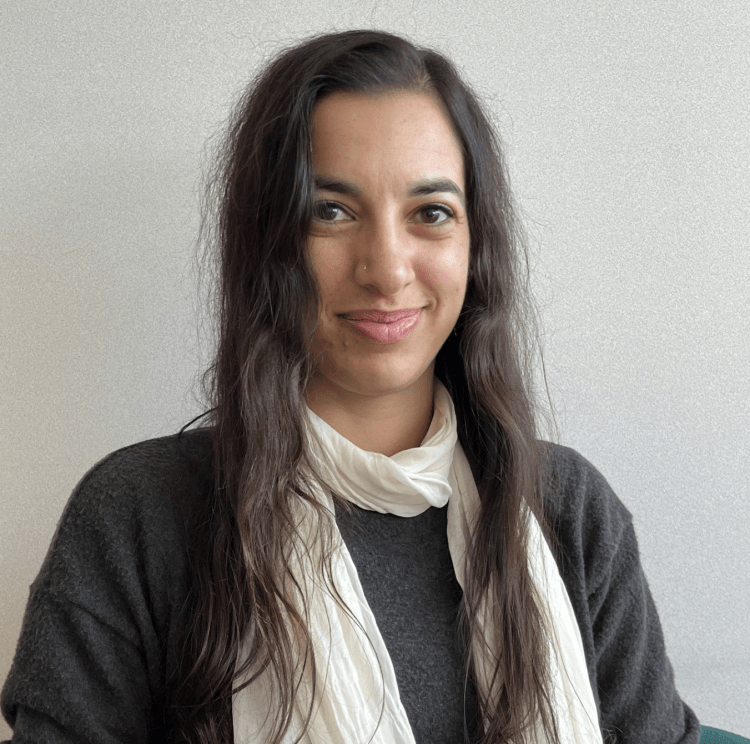
Andri Charalambous is the Project Administrator of GrECI. She holds a Master’s Degree in Education from the MSD School of Education at the University of Nicosia (2013), where she specialised in Theory, Methodology, and Evaluation in Education. Prior to her postgraduate studies, Andri had obtained a Degree in History and Archaeology from Aristotle University of Thessaloniki in 2009. This educational foundation has equipped her with a comprehensive understanding of historical and archaeological principles.
Her main interests lie in ancient and modern history as well as European politics. Αndri has a strong background in management and team coordination in the private sector but she recently switched her career path to the academic sector. She aspires to specialise in the research and implementation of projects related to History.
Paraskevi Achilleos

Paraskevi Achilleos is a Research Associate for the department of History and Archaeology of the University of Cyprus. She holds a Bachelor’s Degree in History and Archaeology from the University of Cyprus and a Master of Arts in Medieval History from the University of Leeds.
She has experience working as a museum researcher and archivist and has also acted as a Research Assistant in projects relating to art history and the contemporary history of Cyprus.
Her research interests are based around questions of social and cultural identity, and cultural exchange. She wrote her Master’s dissertation on the nature of social relations in Lusignan Cyprus, and how the arrival of the Frankish feudal aristocracy brought about a new hierarchical social structure. She is currently engaged in research in the field of early modern Book History, focusing on early modern Greek editions in the context of her role as a Research Associate at GrECI.
Alexandros Theodoropoulos
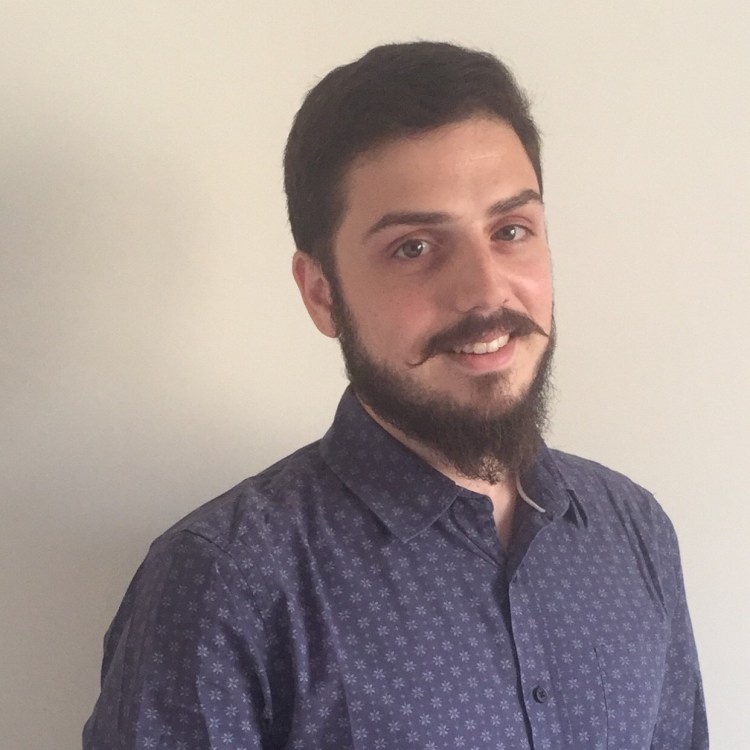
Alexandros Theodoropoulos is a Research Associate at the Department of History and Archaeology of the University of Cyprus. He has studied Classics (BA, MA) at the University of Patras (Greece) and Digital Heritage (MSc) at the University of Cyprus as a Sylvia Ioannou Foundation Fellow.
In the past, he held the position of Research Assistant on Digital Humanities at the Humlab of Umeå University (Sweden) as an Erasmus+ trainee. Among other tasks within the traineeship framework, he contributed to the “Digital Periegesis” project.
His primary academic interests include the study of Greek Literature of the Roman Imperial Period (Ancient Greek Novel, Historiography, Paradoxography and Variabilia) focusing on identity issues, the modern receptions of the classical texts and their use in primary and secondary education, and, lastly, the use of digital infrastructure as a tool for the interpretation of Classical Literature and History.
Francesco Trespidi
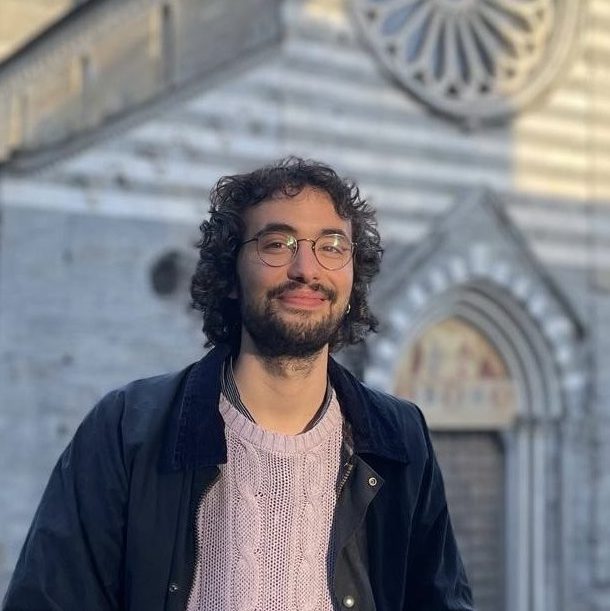
Francesco Trespidi is a PhD student in Greek Philology at the University of Padua, where he also completed his BA and MA in Classical Literature and Ancient History. He also studied at the Galilean School of Higher Education. His PhD research focuses on Greek fragmentary historiography from the Hellenistic period.
Within the GrECI project, he is affiliated with the University of Oslo, assisting Han Lamers in the study of Greek-vernacular wordlists in early modern Europe and related subjects. He also has a keen interest in Byzantine vernacular and early modern Greek, which he has developed through studies at the Institute of Byzantine and Modern Greek Studies in Vienna, the National and Kapodistrian University of Athens, and the University of Cyprus.
Alessia Belli

Alessia Belli is a PhD student in Ancient Philosophy at Ca’ Foscari University of Venice. She earned both her BA in Classics (2022) and her MA in Classical Philology, Ancient Literature, and History (2024) from Sapienza University of Rome, where she also participated in an academic excellence program. Her PhD research focuses on the role of figurative language in the construction and transmission of philosophical meaning in Platonic thought.
Within the GrECI project, she is affiliated with the University of Oslo, where she assists Han Lamers and Chiara Gazzini in the study of Greek words and phrases in early modern art and material culture, building on her additional interest in art history.
Katharina-Maria Schön

Katharina-Maria Schön is a classicist and a Renaissance scholar. She has completed her dissertation on Thomas More’s Utopia (2022), and her forthcoming monograph (2025) on this work focusses on the aspects of polyphony, paradoxes, and the philosophical state construction.
As a research fellow of the GrECI project at the Norwegian Institute in Rome, she will work on the philosophical Neo-Ancient Greek poetry of Daniel Heinsius (1580–1655), in particular his “Peplus Epigrammatum Graecorum”, an understudied collection of epigrams. Among other aspects, she will examine the ways in which the humanist projected his own ethical viewpoints and religious outlook on his portrayal of various Greek philosophers in his poems.
Another interest of Katharina is the political Neo-Latin literature of the twentieth century that was written under the totalitarian regimes of Benito Mussolini and Adolf Hitler. She is the co-editor of Texts of Tyranny: A Selection of Latin Works from Italian and German National Socialism, together with Han Lamers and Bettina Reitz-Joosse (currently under review).
Chiara Gazzini
Chiara Gazzini was a GrECI Postdoctoral Researcher at the University of Oslo from 2023 to 2025, where she focused on the reception and dissemination of Manuel Chrysoloras’ letters in the early modern Republic of Letters. Her work resulted in an edition and translation of his letters, along with several research articles. In June 2025, she joined the Berlin-Brandenburg Academy of Sciences and Humanities as a Research Associate for the project “Commentaria in Aristotelem Graeca et Byzantina.”
 GrECI
GrECI 